Model-independent Way to Determine the Hubble Constant and the Curvature from the Phase Shift of Gravitational Waves with DECIGO
This is a note on paper: https://doi.org/10.3847/2041-8213/ad3553
Introduction
- Hubble Tension:
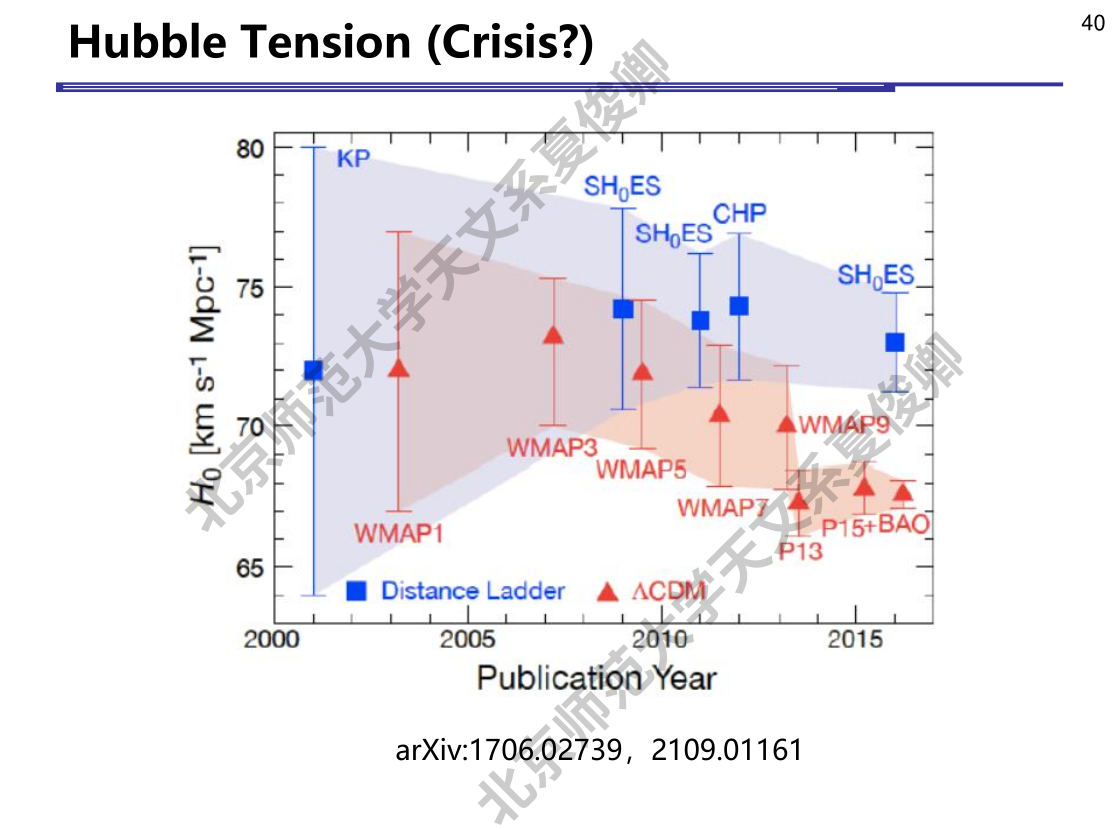
CMB v.s. Supernova
the spatial curvature of the Universe:
- pure CMB data: closed Universe
- combination of Planck lensing data and low redshift baryon acoustic oscillations (BAOs): flat Universe
- pure CMB data: closed Universe
Methodology
traditionally:
model -> Friedman equation
-> theoretical angular diameter distance
here
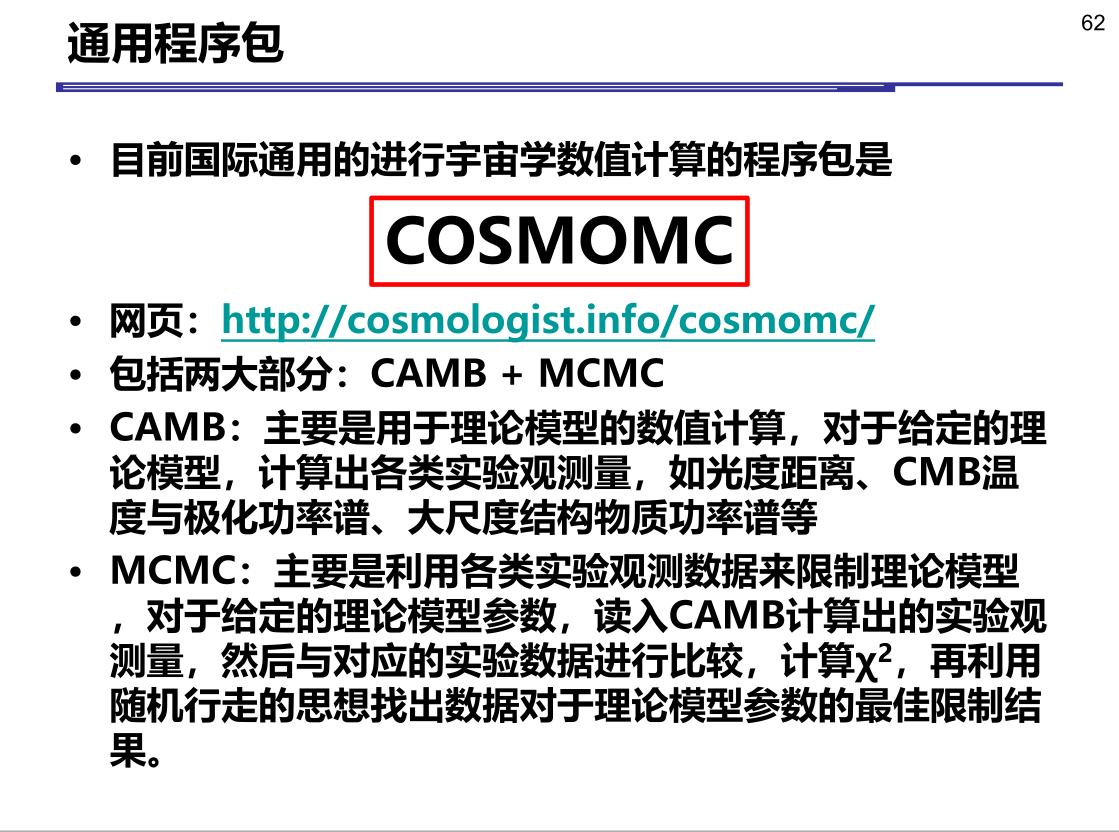
-> get observed distance -> obtain cosmological parameters by chi-square-minimized (Markov Chain Monte Carlo method) this work:
gravitational wave (GW)'s phase shift -> acceleration parameter
( ) -> using artificial neural network (ANN) to get function (
) -> theoretical angular diameter distance here
GW
The gravitational waveform without cosmic acceleration reads
gravitational waveform including the effects of the cosmic acceleration reads
where
The acceleration parameter
is defined as the waveform
depends on 11 parameters: set
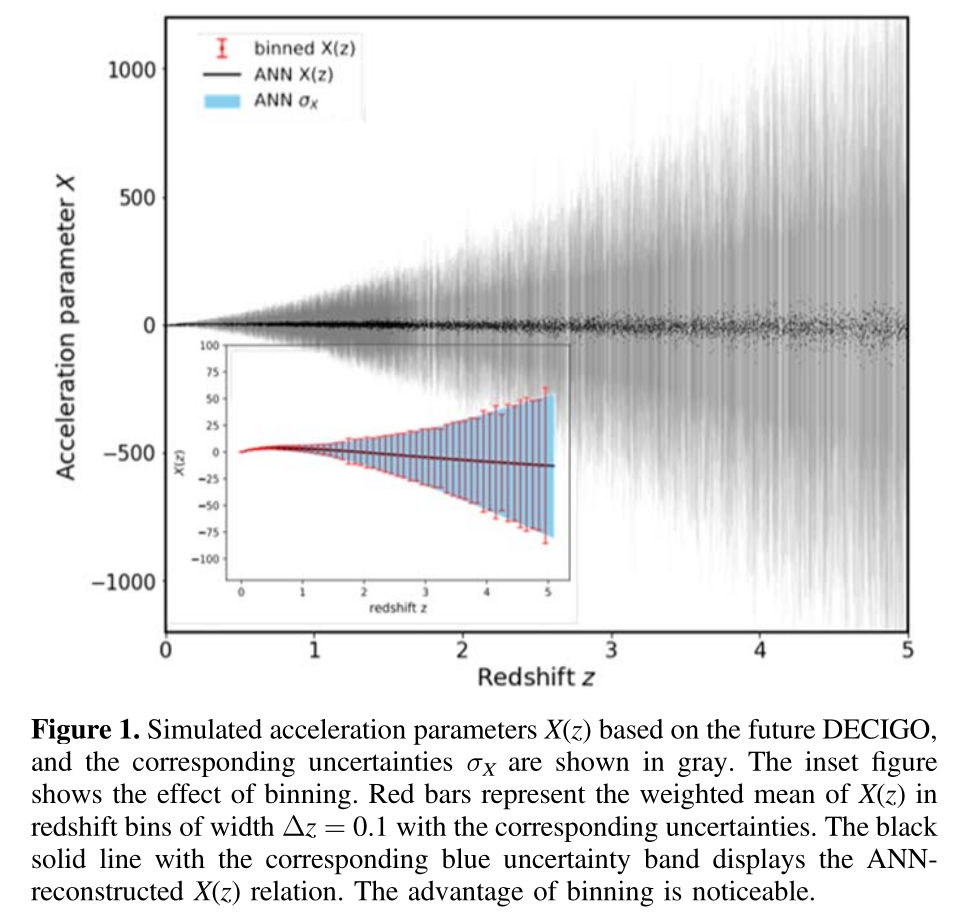
and take for each fiducial redshift , randomly generate sets of using a flat
CDM model with the cosmological parameters derived by Planck 2018 measurements to generate datas divide sample into 50 bins,
train the ANN on the simulated
data and predicte the at other redshifts. ANN: input redshift
, output corresponding cosmic acceleration parameter
and its respective uncertainty at that redshift.
QSOs
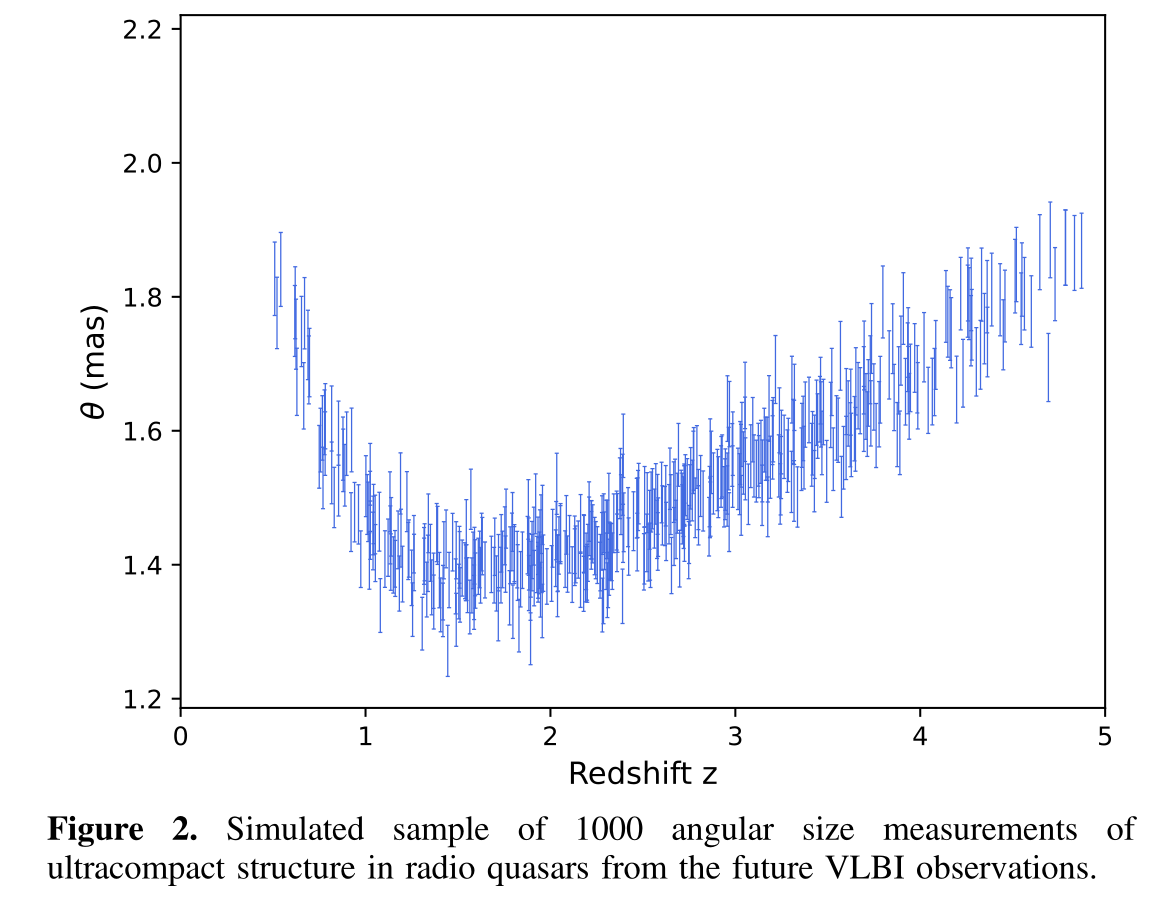
quasi-stellar objects (QSOs)
the characteristic angular size of a distant radio quasar is
: the interferometer baseline : the ratio between the total and correlated flux densities The angular size of the compact structure in radio QSOs is
: the linear size scaling factor describing the apparent distribution of radio brightness within the core Taking
and following the redshift distribution of QSOs from Palanque-Delabrouille et al.(2016) simulate 1000 "angular size-redshift" data, assume the "measured" angular sizes follow a Gaussian distribution
, is obtained from equation above under same model in GW.
Results and Discussion
- the best-fit values of
and
using the Markov Chain Monte Carlo method to minimize the
objective function: here GW ->
-> QSOs ->
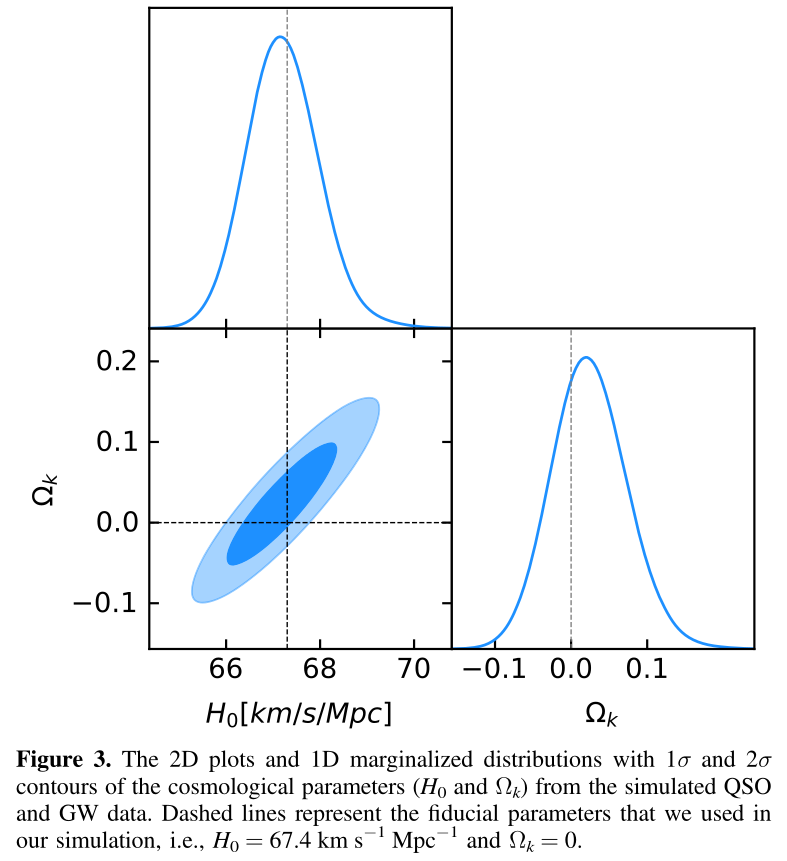
result:
at
confidence level. compare to used model
and
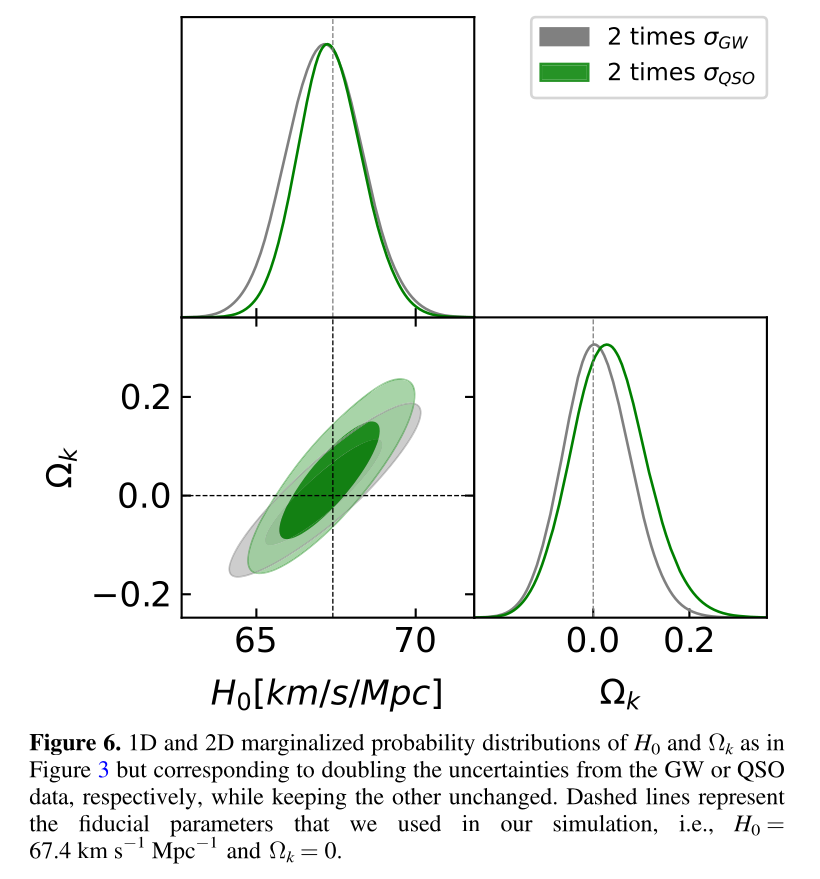
- the uncertainties of the best-fit parameters as a function of QSO sample size
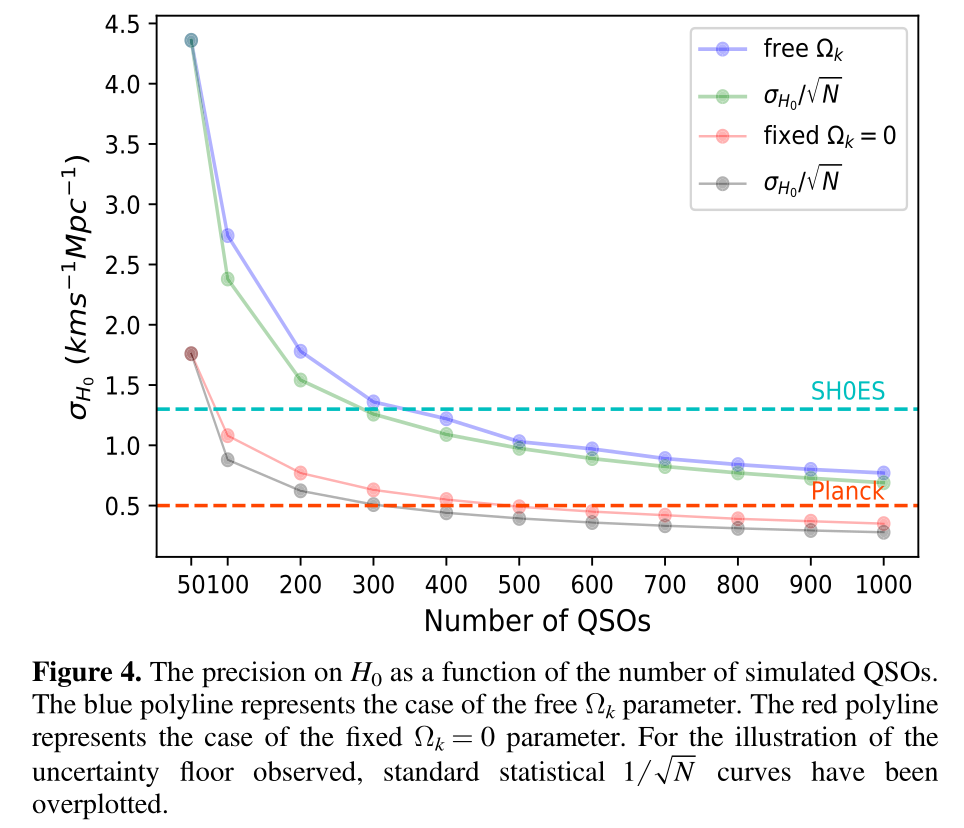
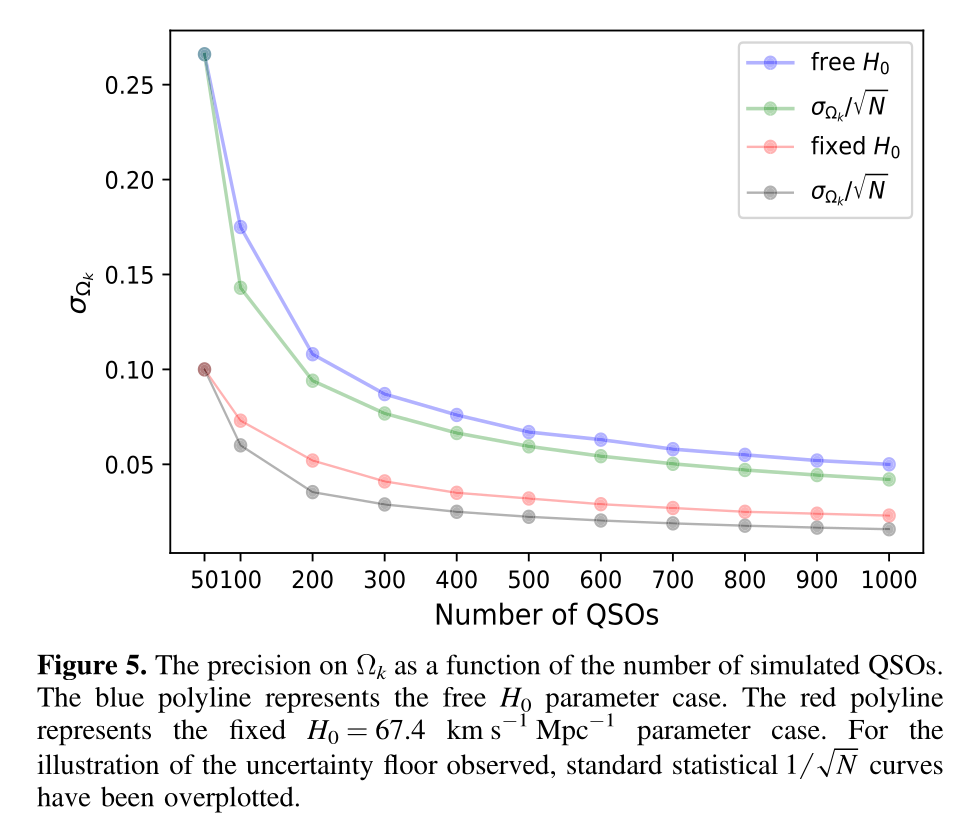
- the uncertainties related to GW signals and QSOs
Conclusion
- a cosmological model-independent method to determine the Hubble constant and curvature parameter simultaneously based on GW from DECIGO and QSOs from VLBI
DECIGO -> GW -> phase shift ->
VLBI -> QSOs -> "angular size-distance" ->
- assume a fiducial cosmology to simulate GW and QSOs datas:
the precision of
the performance of the method on QSO samples of different sizes (from
- potential ways to improve results:
higher angular resolution and lower statistical and systematic uncertainty from QSOs from VLBI
datas from other astronomical probes such SNe Ia and BAOs